
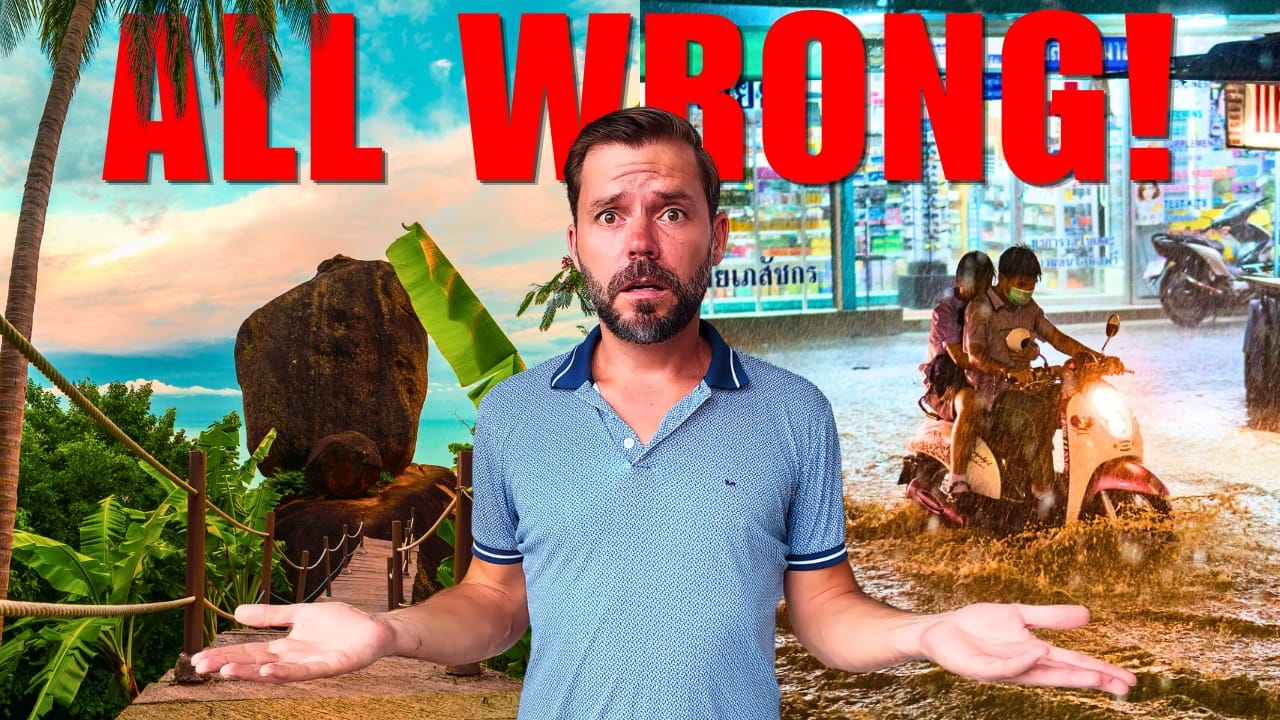
Thailand might be one of the most loved countries in Southeast Asia, but somehow it is still one of the most misunderstood.
Every year, millions of travelers arrive in Thailand with a suitcase full of swimwear, sunscreen, and completely wrong assumptions. Some people think Thailand is just beaches, parties, red-light districts, cheap beer, and chaos. Others think it is dangerous, full of scams, impossible to travel safely, or so spicy that every meal comes with a medical waiver.
Then there are the really dangerous myths.
“You can do whatever you want because it’s Thailand.”
“If you get in trouble, just bribe the police.”
“Cannabis is legal everywhere, so anything goes.”
“Thailand is always sunny.”
And my personal favorite: “Thailand is backward.” Usually said by someone who has never been to Bangkok, never used the BTS Skytrain, never stepped inside ICONSIAM, and still thinks Southeast Asia is running on bamboo Wi-Fi.
So in this Thailand travel guide, we are breaking down the biggest lies everyone tells you about Thailand, what is actually true, what is complete nonsense, and what first-time visitors really need to know before planning a Thailand trip in 2026.
Whether you are planning your first time in Bangkok, a solo trip to Thailand, a Chiang Mai adventure, a beach holiday in Phuket, or a full Thailand travel vlog route across the country, these are the misconceptions that can seriously change how you experience the Land of Smiles.
Save money and avoid scams with my free travel tips and hacks guide here https://paradiseadventures.live/southeast-asia-travel-tips-and-hacks-free-guide/
Table of Contents
- Lie #1: You Can Do Whatever You Want in Thailand
- Lie #2: If the Police Show Up, You Can Just Bribe Them
- Lie #3: Thailand Is Dangerous and Full of Scams
- Lie #4: Thailand Is Just a Party and Sex Tourism Destination
- Lie #5: All Thai Food Is Extremely Spicy
- Lie #6: Thailand Is a “Third World” or Backward Country
- Lie #7: Thailand Is Always Hot and Sunny
- Lie #8: Thai People Are Always Smiling Because They Are Always Happy
- Thailand Travel Tips for First-Time Visitors
- Final Thoughts: The Real Thailand Is Better Than the Myths
- FAQ About Thailand Travel in 2026
Lie #1: You Can Do Whatever You Want in Thailand
This is probably the biggest Thailand lie of all.
Because Thailand has tropical beaches, wild nightlife, cheap beer, cannabis shops in some areas, party streets, backpackers from every corner of the planet, and tourists wandering around in elephant pants at 2 p.m. on a Tuesday, some people arrive thinking the whole country is basically “anything goes.”
It is not.
Thailand can feel relaxed on the surface, but that does not mean there are no rules. In fact, Thailand is socially conservative in many ways. That is one of the first things many tourists misunderstand.
Topless sunbathing is not normal on public beaches. Getting drunk and obnoxious in public is not respected. Temples are not Instagram playgrounds. Monks, Buddha images, spirit houses, and religious sites are not props. The monarchy is not something to joke about. Vaping is illegal. Drug laws are serious. And cannabis is not the free-for-all that many tourists still think it is.
This is where Thailand catches people off guard.
The tourist surface can look relaxed. You can walk down certain streets in Bangkok, Phuket, Pattaya, or Koh Phangan and think, “Wow, this place is wild.” But underneath that tourist bubble is a real country, with real laws, real social expectations, and real consequences.
That is the part too many travelers forget.
You might see people partying in Phuket and assume Thailand is lawless. Then one bad decision later, you discover that “anything goes” was not written anywhere in the legal code.
So here is the simple Thailand travel tip: enjoy yourself, but do not act like an idiot.
Do not do drugs. Do not bring vapes. Do not disrespect the monarchy. Do not get naked on public beaches. Do not climb on sacred statues. Do not treat temples like a fashion shoot. Do not get into fights. Do not assume a tourist area means there are no consequences.
And please, for the love of mango sticky rice, do not come to Thailand and act like the main character in a movie about a man ruining his own life.
Thailand is fun because it has freedom, energy, variety, warmth, and adventure. But freedom is not the same as no rules.
Respect the country and you will probably have an amazing time. Treat Thailand like a lawless adult playground and it can turn very serious, very quickly.
Lie #2: If the Police Show Up, You Can Just Bribe Them
This is one of the most dangerous myths tourists still repeat about Thailand.
You have probably heard someone say it before:
“Don’t worry. If anything happens, just slip the police a few thousand baht and you’ll be fine.”
As if every police officer in Thailand is just a tollbooth in a uniform waiting for your holiday deposit.
That is terrible advice.
First, trying to bribe a police officer is not some clever travel hack. It can be an additional criminal offense on top of whatever problem you were already dealing with. If the officer is not interested, congratulations, you have just made your situation worse.
Second, Thailand is not a “foreigner tax” system where every legal problem can be solved with cash and a nervous smile. There are laws. There are court processes. There are immigration consequences. There are situations that can ruin your trip, drain your bank account, or trap you in the country while a case is being resolved.
Third, Thailand has had high-profile corruption investigations and crackdowns involving officials, which means this idea that bribery is simple, safe, or reliable is even more foolish. Even if corruption exists in some places, that does not make it a tourist strategy. It makes it a risk.
The better travel advice is much more boring, but much more useful:
Do not put yourself in situations where you need to “sort things out.”
Wear a helmet on a scooter. Carry the correct license if you rent a motorbike. Do not carry illegal substances. Do not vape in public. Do not overstay your visa. Do not get into drunk arguments. Do not film sensitive areas. Do not disrespect police, immigration officers, or local authorities.
Most travelers who come to Thailand, respect the rules, and use common sense will never have a serious issue with police. But if you do get stopped, stay calm, be polite, ask what the issue is, and do not start waving cash around like you are in a bad crime movie.
The lie is not that corruption has never existed in Thailand. The lie is that bribery is a safe, normal, reliable backup plan for tourists.
It is not.
If your entire legal strategy is “I’ll just bribe my way out,” you are not a savvy traveler. You are a high-stakes gambler with terrible odds.

Lie #3: Thailand Is Dangerous and Full of Scams
Now let’s talk about the fear-based Thailand travel stories.
“Thailand is dangerous.”
“You’ll get robbed.”
“You’ll get scammed every five minutes.”
“Bangkok is unsafe.”
“Solo travel in Thailand is risky.”
You hear these comments all the time, usually from people who either have never been to Thailand or spent three days in one tourist zone and now consider themselves a Southeast Asia security analyst.
Here is the reality: Thailand is not some danger zone waiting to destroy your holiday.
Millions of people travel Thailand every year. Backpackers, families, retirees, couples, digital nomads, solo travelers, first-time visitors, luxury travelers, and people who have never left their home country before. Most of them have a great time.
That does not mean Thailand is perfect. Scams exist. Petty crime exists. Overcharging exists. Tourist traps exist. But most of the common scams in Thailand are not violent. They are usually based on distraction, confusion, pressure, or tourists trusting a stranger too quickly.
The classic ones are easy to spot once you know them.
The tuk-tuk driver who says the temple is closed today and offers to take you somewhere “better.” The overly friendly stranger who wants to show you a gem shop. The taxi driver who refuses to use the meter. The “special deal” that only exists because you look new, confused, and slightly sunburned.
Are these annoying? Yes.
Are they the same as Thailand being dangerous? No.
The fix is simple. Use Grab or Bolt where available. Check prices before getting in a vehicle. Do not accept unsolicited help from people who approach you near major tourist attractions. Be skeptical of “lucky” deals, “free” tours, and any stranger who seems extremely invested in your shopping plans.
Also, do not walk around drunk at 3 a.m. flashing cash, wearing expensive jewelry, and arguing with strangers. That advice applies in Bangkok, London, New York, Sydney, and literally anywhere humans exist.
The truth is that many visitors find Thailand safer and more comfortable than they expected. Thai people are often warm, helpful, and patient with tourists. Bangkok, despite its size and chaos, can feel surprisingly easy once you understand the transport system. Chiang Mai is one of the most beginner-friendly cities in Southeast Asia. The islands can be extremely relaxed if you choose the right area.
So yes, use common sense. Watch out for scams. Keep your belongings secure. Avoid sketchy situations. But do not let fear-based headlines convince you that Thailand is too dangerous to visit.
The bigger danger is probably spending your entire trip worrying instead of enjoying the country.
Book your Thailand accommodation through trusted providers here:
Booking.com = https://booking.tp.st/ZjeV6SG5
Agoda = https://agoda.tp.st/LKGhCniM
Hostelworld = https://hostelworld.tp.st/yznTwSKe
Lie #4: Thailand Is Just a Party and Sex Tourism Destination
This might be the most unfair Thailand stereotype.
If someone’s entire mental image of Thailand comes from The Hangover Part II, YouTube nightlife videos, Pattaya walking street clips, and that one friend who came back from Bangkok with stories he probably should not be repeating, then yes, they might think Thailand is just one giant red-light district with beaches attached.
But that is not Thailand.
That is one very specific slice of Thailand, usually seen by people who deliberately walk straight into that slice and then act shocked that it exists.
Yes, nightlife exists. Yes, party tourism exists. Yes, certain areas in Bangkok, Pattaya, Phuket, and Koh Phangan are famous for adult entertainment, clubs, bars, and late-night chaos. Pretending that side of Thailand does not exist would be dishonest.
But pretending that is all Thailand is? That is ridiculous.
That is like going to Las Vegas, standing outside a casino, and saying, “America is just slot machines and Elvis impersonators.”
No, mate. You picked the Elvis zone.
Thailand is also ancient temples, mountain villages, national parks, floating markets, coffee plantations, jungle hikes, night markets, luxury resorts, family beaches, wellness retreats, diving islands, Muay Thai gyms, cooking classes, digital nomad cafes, Buddhist festivals, local communities, and some of the most beautiful landscapes in Asia.
Go to Chiang Mai and you can spend your days visiting temples, hiking, drinking coffee, and exploring mountain roads. Go to Krabi and you get limestone cliffs, island hopping, kayaking, and beaches that look fake until you stand on them. Go to Bangkok and you get street food, rooftop bars, mega malls, river temples, markets, and a city that feels like five different cities stacked on top of each other. Go to Koh Lanta and you can have a quiet beach escape. Go to Khao Sok and you can sleep on a floating bungalow surrounded by jungle and limestone cliffs.
Thailand can be whatever you design it to be.
If you want chaos, Thailand can give you chaos.
If you want peace, Thailand can give you peace.
If you want food, culture, nature, temples, nightlife, beaches, budget travel, luxury travel, solo travel, family travel, or digital nomad life, Thailand can do all of that too.
The lie is not that Thailand has party tourism.
The lie is pretending that party tourism is Thailand.

Lie #5: All Thai Food Is Extremely Spicy
Before some people travel to Thailand, they act like every meal is going to be a medical emergency.
They imagine ordering dinner and the chef throwing twelve chilies into a wok, looking them dead in the eyes, and saying, “Good luck, foreigner.”
And look, Thai food can be spicy.
Some Thai dishes do not just warm your mouth. They make you question every life decision that led you to that spoonful. You take one bite and suddenly you are sweating from places you did not know had pores.
But the idea that all Thai food is extremely spicy is completely wrong.
Thai food is not just about heat. It is about balance. Sweet, sour, salty, spicy, bitter, fresh, rich, crunchy, soft, fragrant, smoky, creamy, and sharp. The best Thai food is layered. It is not just “how much pain can we fit into a bowl?”
Also, the spice level is often adjustable, especially in tourist areas.
If you do not want spicy, say “mai phet.”
If you want a little spicy, say “phet nit noi.”
If you want Thai spicy, first make sure your will is updated.
There are plenty of Thai dishes that are mild, beginner-friendly, or easy to customize. Pad Thai, khao man gai, mango sticky rice, grilled chicken, fried rice, spring rolls, noodle soups, Thai omelette over rice, banana roti, coconut ice cream, pork skewers, and many curry dishes can be ordered mild depending on where you are.
Even dishes like tom yum or papaya salad can often be made less spicy in tourist areas, although “less spicy” in Thailand can sometimes mean they removed three of the twelve bullets.
The real Thailand food tip is this: do not be embarrassed to ask.
Thai people are used to tourists not handling spice. They are not standing there judging you because you cannot eat lava for breakfast. Most vendors would rather you enjoy the food than pretend to be brave and then sit there crying into your fried rice.
The mistake is not eating Thai food because you are scared it will be spicy.
The bigger mistake is ordering “Thai spicy” on day one because you watched one YouTube video and now think you are built different.
You are not built different.
You are built like a man who will need immediate access to air conditioning, coconut water, and a bathroom.

Book your Thailand Adventures and Tours here:
Get Your Guide = https://paradiseadventures.live/gygyt
Klook = https://paradiseadventures.live/klookyt (Use code PARADISEADVENTURESKLOOK to get up to 10% off)
Lie #6: Thailand Is a “Third World” or Backward Country
This one always surprises me.
Some people still imagine Thailand as bamboo huts, dirt roads, unreliable electricity, and maybe one internet cafe guarded by a sleepy dog.
Then they land in Bangkok and immediately realize they were about forty years out of date.
Bangkok is a massive, modern, fully functioning city with international airports, elevated trains, underground metro lines, luxury malls, world-class hospitals, Michelin-recognized food, rooftop bars, coworking spaces, five-star hotels, and more convenience than many Western cities.
The BTS Skytrain and MRT make large parts of Bangkok easy to navigate without sitting in traffic. Malls like ICONSIAM, CentralWorld, Siam Paragon, and EmQuartier are not just shopping centers. They are air-conditioned cities inside the city. Some have indoor floating market concepts, food halls that make you question your entire diet, luxury stores, cinemas, banks, coworking spaces, and enough coffee shops to power a digital nomad army.
Then there is the medical side. Thailand is one of the world’s major medical tourism destinations. Hospitals in Bangkok attract international patients for procedures, checkups, dental work, cosmetic treatments, and specialist care. Many travelers are shocked by how modern and efficient private hospitals can be compared to what they are used to back home.
Does that mean every part of Thailand is modern and wealthy? No.
Of course not.
Rural areas are more basic. Some islands have limited infrastructure. Some roads are rough. Some regions are poorer than others. That is true in almost every country on earth.
The mistake is thinking Thailand is either luxury Bangkok or undeveloped countryside, with nothing in between.
Thailand is layered. You can take the Skytrain to a luxury mall in the afternoon, eat at a street stall for dinner, ride past a temple that is hundreds of years old, and finish the night on a rooftop bar looking over one of Asia’s biggest skylines.
That contrast is not a weakness. It is one of the reasons Thailand is so fascinating.
If you arrive expecting to “rough it” in Bangkok, you may be confused. Bangkok is not a village. It is a proper megacity, and in some ways the infrastructure, convenience, and hospitality may embarrass cities you assumed were more developed.
The bamboo hut image is outdated.
Thailand is not backward. Your stereotype is.
Lie #7: Thailand Is Always Hot and Sunny
Thailand is hot.
Let’s get that out of the way.
You are probably not going to need a winter coat in Phuket. Bangkok is not famous for crisp autumn walks and cozy scarves. The country is tropical, humid, and at times so hot that stepping outside feels like being hugged by a wet towel straight from the microwave.
But the lie is that Thailand is always sunny, everywhere, all year.
It is not.
Thailand has seasons, and they matter. If you are planning a Thailand trip in 2026, understanding the weather can completely change your experience.
Generally, the cooler, drier season runs from around November to February. This is why it is peak season in many parts of the country. The weather is more comfortable, the beaches are popular, and prices are often higher because everyone else had the same idea.
Then there is the hot season, which can be brutally hot. Not “lovely summer day” hot. More like “why is my soul sweating?” hot. Bangkok in the hot season can feel like the city is trying to cook you in traffic.
Rainy season is also misunderstood. Many travelers hear “rainy season” and imagine nonstop rain for three months. That can happen during storms, but often rainy season means short, heavy downpours, dramatic skies, greener landscapes, cheaper prices, and fewer crowds.
That said, rainy season can also mean rough seas, cancelled boat trips, flooding, travel delays, and less ideal beach conditions depending on where you are.
And then there is smoke season, especially in northern Thailand. Places like Chiang Mai can experience serious air quality issues during parts of the year due to burning and regional pollution. This can affect views, outdoor activities, hiking, and your health if you are sensitive to air quality.
So when people ask, “When is the best time to visit Thailand?” the real answer is: it depends where you are going.
Bangkok is different from Chiang Mai.
Phuket is different from Koh Samui.
The Andaman coast is different from the Gulf coast.
The islands are different from the north.
If you want beaches, check the specific coast. If you want mountains, check smoke season. If you want cheaper travel, rainy season might actually be a great option. If you want postcard weather, you may pay more and deal with more crowds.
Thailand does have amazing weather, but it is not the same weather everywhere, all the time.
Plan properly and you can still have an incredible trip. Ignore the seasons and you might end up standing in the rain on a cancelled boat tour wondering why Instagram lied to you.

Lie #8: Thai People Are Always Smiling Because They Are Always Happy
Thailand is often called the Land of Smiles.
It is a beautiful nickname, and in many ways it fits. Thai people can be incredibly warm, polite, patient, and welcoming. For many first-time visitors, that hospitality is one of the reasons Thailand becomes addictive.
But the smile does not always mean what foreigners think it means.
This is one of the more subtle cultural misunderstandings in Thailand travel.
In Western culture, a smile is often interpreted as happiness, friendliness, agreement, or approval. In Thailand, a smile can mean those things, but it can also mean politeness, embarrassment, discomfort, apology, disagreement, awkwardness, or an attempt to avoid conflict.
Thai culture places a strong value on social harmony. People often avoid direct confrontation, especially in public. Losing face, causing embarrassment, raising your voice, or making a scene is usually seen very negatively.
That means a Thai person might smile even when they are uncomfortable. They might smile when they disagree. They might smile when they are trying to keep the situation calm. They might smile because they do not want to embarrass you. They might smile because saying what they really think directly would feel too harsh.
This does not mean Thai smiles are fake.
It means the smile is part of a different communication system.
If you are visiting Thailand, this matters because foreigners can misread situations. You might think someone is fine with your behavior because they smiled, when actually they were being polite. You might think a service worker is happy with your joke, when actually they are just trying to avoid conflict. You might think everything is okay because nobody directly told you otherwise.
The best approach is simple: be respectful, be calm, and pay attention to context.
Do not raise your voice. Do not publicly embarrass people. Do not assume politeness means permission. Do not mistake patience for weakness. Do not treat Thai hospitality like something you are entitled to.
The Land of Smiles is real, but Thai people are still human. They feel frustration, sadness, anger, stress, boredom, and everything else people feel around the world. They may just express those emotions differently in public.
Understanding that will make your Thailand trip smoother, more respectful, and honestly much more interesting.
Thailand Travel Tips for First-Time Visitors
Once you understand the biggest Thailand lies, the country becomes much easier to travel.
Here are some practical Thailand travel tips for first-time visitors, especially if you are planning a trip to Bangkok, Chiang Mai, Phuket, Krabi, Pattaya, Koh Samui, or the islands.
Use Grab or Bolt Instead of Random Taxi Negotiations
In Bangkok and many major tourist areas, ride-hailing apps can save you money, stress, and confusion. You know the price before you get in, the driver is tracked, and you avoid awkward meter arguments.
Dress Respectfully at Temples
Cover shoulders and knees when visiting temples. Take off your shoes where required. Do not climb on statues, do not point your feet at Buddha images, and do not act like sacred spaces are just backdrops for content.
Learn a Few Thai Phrases
You do not need to be fluent, but a little effort goes a long way. “Sawasdee” for hello, “khop khun” for thank you, “mai phet” for not spicy, and “phet nit noi” for a little spicy can make your trip easier and friendlier.
Do Not Rent a Scooter Unless You Know What You Are Doing
Scooter accidents are one of the most common ways tourists get hurt in Thailand. If you do rent one, wear a helmet, have the correct license, understand your insurance, and do not learn how to ride in traffic on a holiday island.
Check the Weather by Region
Do not just search “Thailand weather.” Search the exact destination. Phuket, Koh Samui, Bangkok, Chiang Mai, Pai, Krabi, and Koh Tao can have different conditions at the same time of year.
Respect Local Culture
Thailand is welcoming, but it is not your personal playground. Keep your voice down in public, stay calm in disagreements, respect religious sites, and remember that you are a guest in someone else’s country.

Final Thoughts: The Real Thailand Is Better Than the Myths
The funny thing about Thailand is that many of the stereotypes exist because the country is so famous.
Everyone has heard something. Everyone has seen a movie, a YouTube video, a news story, a travel vlog, a party clip, or a dramatic warning from someone who may or may not have spent six hours in Bangkok airport and now speaks like an expert.
But the real Thailand is much more interesting than the myths.
It is not just a party destination.
It is not lawless.
It is not always sunny.
It is not backward.
It is not impossible to travel safely.
And it is definitely not just spicy food, scams, and chaos.
Thailand is layered. It can be calm or chaotic, cheap or luxurious, spiritual or wild, modern or traditional, easy or overwhelming, depending on where you go and how you travel.
That is what makes it one of the best travel destinations in the world.
If you come with respect, curiosity, patience, and a little common sense, Thailand can give you beaches, temples, food, nightlife, mountains, islands, cities, culture, adventure, and stories you will be telling for years.
But if you arrive believing the wrong lies, you may either avoid things you should experience or take risks you absolutely should not take.
So forget the lazy stereotypes.
Travel Thailand properly. Respect the country. Learn the culture. Eat the food. Check the seasons. Use common sense. And do not, under any circumstances, build your holiday plan around bribing the police.
That is not a Thailand travel guide.
That is the opening scene of a disaster documentary.
FAQ About Thailand Travel in 2026
Is Thailand safe for tourists in 2026?
Yes, Thailand is generally safe for tourists, including first-time visitors and solo travelers, as long as you use normal travel common sense. Petty scams and overcharging can happen in tourist areas, but violent crime against tourists is not something most travelers experience. Use ride-hailing apps, avoid sketchy situations, watch your belongings, and do not get involved with drugs or illegal activity.
What are the biggest scams in Thailand?
Common Thailand scams include overpriced tuk-tuks, taxi drivers refusing to use the meter, the “temple is closed” scam, gem shop scams, inflated tour prices, and fake “special deals.” Most are avoidable by using Grab or Bolt, booking through reputable platforms, checking reviews, and avoiding unsolicited help from strangers near tourist attractions.
Is vaping legal in Thailand?
No, vaping is illegal in Thailand. Tourists should not bring vapes, e-cigarettes, pods, e-liquids, or heat-not-burn devices into the country. Penalties can include confiscation, fines, detention, or legal proceedings. This is one of the most important Thailand travel tips many visitors still miss.
Is cannabis legal in Thailand for tourists?
Thailand’s cannabis rules have changed and tightened compared to the early post-decriminalization period. Tourists should not assume cannabis is a recreational free-for-all. Public smoking can lead to serious penalties, and regulations around sales and medical use have become stricter. If you are unsure, avoid it completely.
Is Thailand only for partying?
No. Thailand has party destinations, but it is not only a party country. You can travel Thailand for beaches, temples, food, wellness retreats, national parks, diving, hiking, luxury resorts, family holidays, digital nomad life, or cultural experiences. If all you see is nightlife, that usually says more about your itinerary than the country.
Is Thai food always spicy?
No. Thai food can be spicy, but not all Thai food is extremely hot. Many dishes are mild or can be adjusted. Try phrases like “mai phet” for not spicy or “phet nit noi” for a little spicy. Beginner-friendly dishes include Pad Thai, khao man gai, fried rice, noodle soup, mango sticky rice, grilled chicken, and banana roti.
When is the best time to visit Thailand?
The cooler, drier months from around November to February are often considered the best time to visit many parts of Thailand. However, the best time depends on where you are going. Bangkok, Chiang Mai, Phuket, Koh Samui, Krabi, and the islands can have different weather patterns. Always check the specific destination before booking.
Is rainy season a bad time to visit Thailand?
Not necessarily. Rainy season can mean cheaper prices, greener landscapes, fewer crowds, and dramatic skies. However, it can also bring rough seas, cancelled boat trips, flooding, and travel delays depending on the destination. If your Thailand trip is focused on island hopping, check the coast and month carefully.
Is Bangkok good for first-time visitors?
Yes, Bangkok is one of the best places to start a Thailand trip if you are prepared for a big, busy city. It has excellent food, temples, malls, rooftop bars, markets, public transport, and easy onward travel connections. First-time visitors should stay near BTS or MRT transport lines to make getting around easier.
Is Chiang Mai worth visiting?
Yes, Chiang Mai is one of Thailand’s best destinations for temples, mountains, cafes, digital nomad life, markets, and a slower pace than Bangkok. However, visitors should check air quality during smoke season, especially in the early months of the year, because it can affect views and outdoor activities.
Can I travel Thailand on a budget?
Yes. Thailand can still be a great budget travel destination if you eat local food, use public transport, stay in guesthouses or affordable hotels, avoid overpriced tourist traps, and plan your route carefully. However, popular islands, luxury areas, and peak season travel can be much more expensive.
What should I avoid doing in Thailand?
Avoid drugs, vaping, overstaying your visa, disrespecting temples or Buddha images, making jokes about the monarchy, getting into public arguments, riding scooters without proper experience, and assuming tourist areas have no rules. Thailand is fun and welcoming, but it is still a real country with real laws.
What is the biggest mistake tourists make in Thailand?
The biggest mistake is assuming Thailand is either completely dangerous or completely lawless. Both are wrong. Thailand is generally safe and welcoming, but tourists still need to respect the culture, laws, weather, roads, and local customs. The best Thailand travel experiences come from balancing adventure with common sense.
Watch the full video: The Lies Everyone Tells You About Thailand 🇹🇭 by Paradise Adventures.