
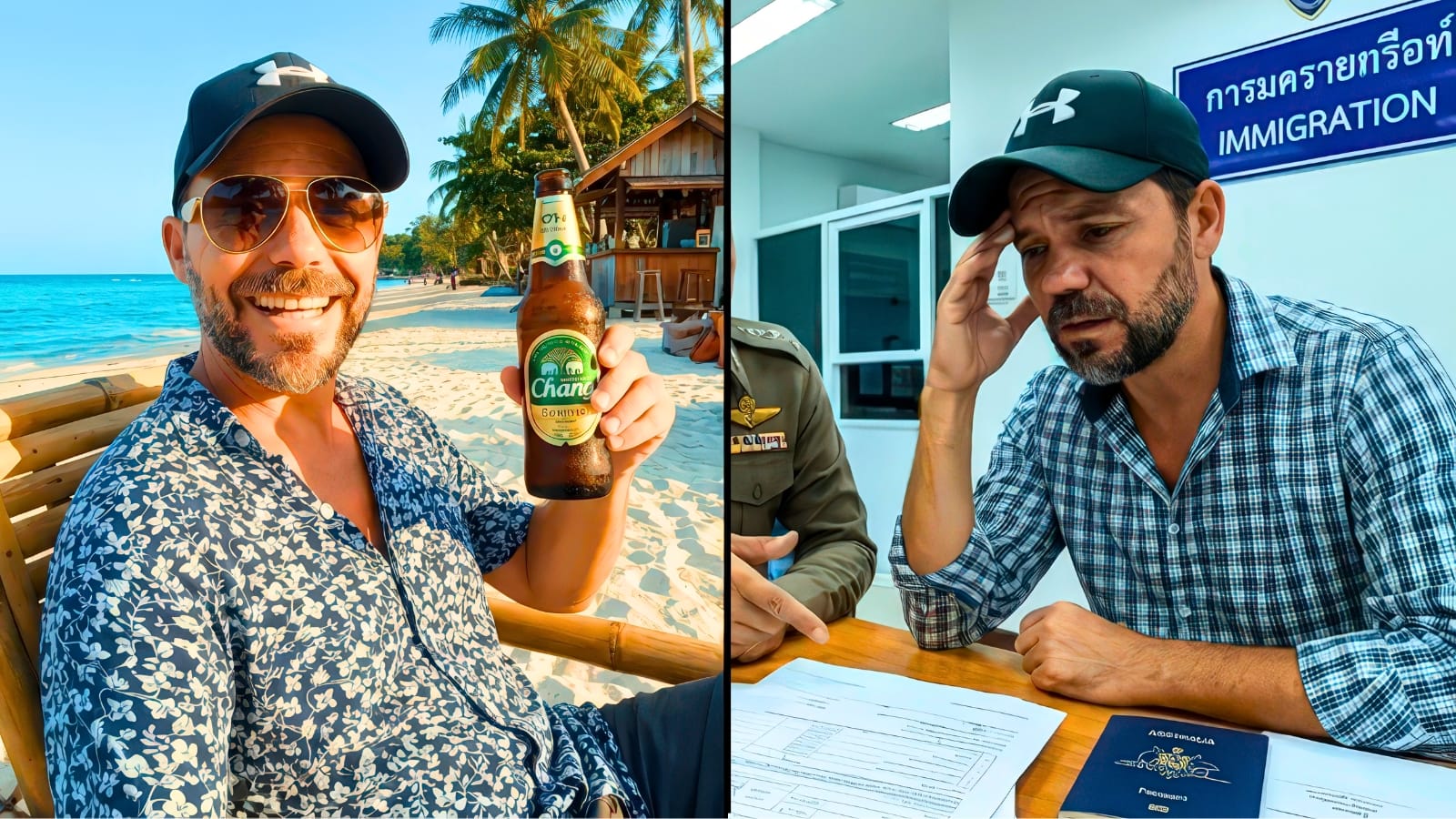
Thinking about moving to Thailand because your last holiday felt like paradise? I get it. The warm weather, cheap street food, beach sunsets, rooftop bars, friendly people, and ice-cold Chang beer can make you start questioning every life decision you ever made back home.
One minute you are on holiday in Thailand eating mango sticky rice beside the beach, and the next minute you are mentally selling your furniture, cancelling your phone contract, Googling “move to Thailand 2026,” and wondering why you ever paid winter heating bills in the first place.
But here is the reality check: living in Thailand is nothing like your holiday.
That does not mean Thailand is bad. Not even close. Thailand can be one of the most exciting, affordable, beautiful, chaotic, convenient, frustrating, and rewarding places to live in the world. But the Thailand you experience on a two-week holiday is not the same Thailand you experience when you unpack your bags, sign a rental contract, deal with immigration, build routines, make real friends, and try to create a normal life.
You can avoid scams and save money with my free travel tips and hacks guide here https://paradiseadventures.live/southeast-asia-travel-tips-and-hacks-free-guide/
A holiday in Thailand is an escape. Living in Thailand is a lifestyle. And those are two very different things.
In this guide, we are going to talk about the real differences between travel Thailand mode and life in Thailand mode. We will cover visa admin, friendships, tourist areas versus real local neighborhoods, the language barrier, the cost of living mindset, and the simple test you should do before moving to Thailand long term.
If you are thinking about moving to Thailand, retiring in Thailand, becoming a digital nomad, or just wondering whether Thailand expat life is actually as dreamy as it looks on YouTube, this is the honest real talk Thailand guide you need before you pack your life into two suitcases and a suspiciously overstuffed carry-on.
Table of Contents
- Holiday Thailand vs Living in Thailand
- Visa Life in Thailand: The Romance Killer
- Making Real Friends in Thailand Is Harder Than It Looks
- Tourist Thailand vs Real Thailand
- The Language Barrier Stops Being Cute
- Daily Life in Thailand Is Still Daily Life
- The Cost of Living Trap
- Bangkok, Pattaya and Beyond: Where You Live Changes Everything
- The Boring Tuesday Test
- Should You Move to Thailand?
- FAQ About Living in Thailand
Holiday Thailand vs Living in Thailand
When most people say they want to live in Thailand, what they often mean is they want to live inside their holiday.
They remember the hotel breakfast, the rooftop drinks in Bangkok, the beach clubs in Phuket, the night markets in Chiang Mai, the sunsets in Koh Samui, the nightlife in Pattaya, and the feeling of being completely free from responsibility. Thailand on holiday feels easy. It feels exciting. It feels like life has suddenly been turned up from standard definition to 4K.
But that holiday feeling exists because you are temporarily removed from your normal life.
You are not dealing with long-term paperwork. You are not renewing your visa. You are not figuring out health insurance. You are not trying to make meaningful friendships. You are not worrying about whether your condo internet works during a rainstorm. You are not trying to explain a plumbing issue to a maintenance guy using Google Translate while both of you slowly lose the will to live.
On holiday, Thailand removes responsibility. When you live in Thailand, responsibility comes back wearing flip-flops.
This is the biggest mistake people make when they imagine moving to Thailand. They think the feeling they had on holiday will continue forever. But holidays are designed to be temporary, exciting, and low-pressure. Real life is not.
Real life in Thailand includes grocery shopping, laundry, visa rules, traffic, banking, dentist appointments, rainy season, broken air conditioning, noisy neighbors, and the occasional moment where you wonder why the construction next door started at 7:01 in the morning with the confidence of a military operation.
Again, this does not make Thailand bad. It makes Thailand real.
And for the right person, real Thailand can be better than holiday Thailand. But only if you understand what you are actually signing up for.
Visa Life in Thailand: The Romance Killer
On holiday, immigration is simple. You land, smile at the airport, get your passport stamped, and head straight for noodles, beaches, or Bangkok chaos.
Living in Thailand is a different game.
Once you stay long term, Thailand becomes less of a postcard and more of an admin system with palm trees. Depending on your situation, you may need to think about long-stay visas, extensions of stay, 90-day reporting, re-entry permits, address reporting, photocopies, bank letters, passport photos, and calendar reminders that suddenly become more important than your birthday.
This is one of the first reality checks of expat life Thailand. The country might feel relaxed, but immigration rules are not something you can treat casually.
If you are living in Thailand long term, you need to understand the specific conditions of your visa. A tourist visa, retirement visa, marriage visa, education visa, business visa, or digital nomad-style setup can all come with different requirements. You cannot just assume that because your friend in Pattaya does something one way, it applies to you too.
That is how people get into trouble.
Thailand has systems, and those systems matter. If you are required to report your address every 90 days, you need to do it. If you need a re-entry permit before leaving the country, you need to understand that before booking a quick weekend trip to Vietnam. If your permission to stay expires, you cannot just shrug and say, “But I love pad Thai.” Immigration will not be moved by your emotional relationship with street food.
Nothing humbles a grown adult faster than standing in an immigration office holding twelve passport copies, one blue pen, and the facial expression of someone who is only 40% sure they are in the right queue.
And yet, this is part of living in Thailand.
It is not exciting. It is not cinematic. Nobody makes a travel vlog called “I Spent Four Hours Waiting for a Stamp and Questioning My Life Choices.” Although honestly, maybe they should.
The important thing is this: visa admin does not mean moving to Thailand is a bad idea. It means the holiday fantasy leaves out the paperwork.
If you want to live in Thailand successfully, you need to treat admin as part of the lifestyle. Keep copies of important documents. Set reminders. Understand your visa. Stay updated. Ask reliable sources. Do not build your entire legal status around something a guy at a bar told you in 2019.
Thailand can be a wonderful place to live, but it rewards people who are organized. If you are allergic to paperwork, long-term life here may test your soul.

Making Real Friends in Thailand Is Harder Than It Looks
Thailand is social. That is part of the magic.
There are bars everywhere, markets everywhere, coffee shops everywhere, coworking spaces everywhere, and travelers from every corner of the planet. In one night, you can meet someone from England, Germany, Australia, Canada, and one guy from Florida who is “working on something in crypto” but cannot quite explain what it is.
On holiday, making friends in Thailand feels effortless. Everyone is relaxed. Everyone wants to go out. Everyone is living their best life. You meet someone at a bar, spend two days together, add each other on Instagram, and say, “Mate, we should definitely keep in touch.”
Then three days later, they are in Bali, back in Birmingham, or posting a sunrise quote from an airport lounge.
That is the trap. Holiday friendships are fast, intense, and temporary. Real friendships are slower.
When you live in Thailand, you will meet a lot of people. But meeting people is not the same as building a life with people.
This is especially true in popular expat and tourist areas like Bangkok, Pattaya, Phuket, Chiang Mai, and Koh Samui. There is a constant flow of people coming and going. Some are tourists. Some are digital nomads. Some are retirees. Some are here for a few months. Some are here forever. Some say they are here forever and leave six weeks later because their “passive income thing” became extremely active at not making income.
In my experience, there are two broad types of foreigners who end up living in Thailand long term.
The first type is searching for something. They want a different pace of life. They want adventure. They want to build something new. They are curious, open-minded, respectful, and genuinely interesting to be around. These are often the people who thrive in Thailand because they are not just trying to consume the country. They are trying to build a better life within it.
The second type is running from something. And to be clear, there is no judgment here. Thailand can genuinely be a great place to reset after a difficult period in life. But people who are running from problems without facing them can be complicated company. They may be charming at first. They may tell you their whole life story in the first hour. They may ask to borrow money by the third week. And by month three, they may vanish into the Southeast Asian mist like a poorly managed Netflix subplot.
The difficult part is that both types can look the same at first. They are in the same bars, the same Facebook groups, the same gyms, the same meetups, and they both love Thailand.
So how do you build real friendships?
You do it the boring way.
You build routines. Join a gym. Go to the same coffee shop. Work from coworking spaces. Attend weekly meetups. Take Thai classes. Join sports groups. Find hobbies. Become a regular somewhere. Real friendships usually come from repeated contact, not one big night out on a party street.
The people who build a real life in Thailand usually stop chasing instant social circles and start creating normal routines. They become part of a community slowly. They see the same people again and again. Over time, Thailand starts feeling less like a destination and more like home.
Book your Thailand accommodation through trusted providers here:
Booking .com = https://booking.tp.st/ZjeV6SG5
Agoda = https://agoda.tp.st/LKGhCniM
Hostelworld = https://hostelworld.tp.st/yznTwSKe
Tourist Thailand vs Real Thailand
The Thailand most people experience on holiday is not fake, but it is curated.
Tourist Thailand is designed to be easy. English menus. Hotel transfers. Tour desks. Beach clubs. Rooftop bars. Grab rides. Night markets. Massages. Smoothie bowls. Island hopping. Friendly staff who solve problems before they become your problems.
Real Thailand is different.
Real Thailand is local neighborhoods, residential sois, hardware shops, pharmacies, morning markets, laundry lines, street dogs, condo offices, water bills, motorbike repairs, and food stalls where the menu is entirely in Thai and your confidence disappears faster than your mobile data.
Tourist Thailand asks, “Would you like another coconut?”
Real Thailand asks, “Do you know which soi floods when it rains?”
That is the difference.
If you move to Thailand expecting your life to feel like a permanent resort stay, you may be disappointed. Unless you have serious money, long-term life usually happens a little outside the postcard. You may not live directly on the beach. You may not spend every day at rooftop bars. You may not be surrounded by perfectly polished tourist convenience.
You may live in a quieter area with fewer foreigners, fewer English signs, fewer tourist comforts, and much better food.
And honestly, that can be the best version of Thailand.
Because once you move beyond the tourist bubble, you start to see the country differently. You stop asking, “What attractions should I visit?” and start asking practical questions like:
- Where is the nearest hospital?
- Which supermarket has the things I actually use?
- How far is the nearest night market?
- Is the internet reliable in this condo?
- Does this area flood in rainy season?
- Can I get around without a motorbike?
- Where is the nearest pharmacy?
- Is this neighborhood quiet at night?
- Can I live here on a boring Tuesday?
Holiday Thailand does not ask these questions. Living in Thailand does.
This is where many people either fall deeper in love with Thailand or realize they were only in love with the holiday version.
There is nothing wrong with loving tourist Thailand. Thailand tourism is popular for a reason. Bangkok, Phuket, Chiang Mai, Pattaya, Koh Samui, Krabi, and the islands are world-famous because they are genuinely exciting places to visit.
But moving to Thailand is not the same as taking a Thailand holiday. You are not just choosing beaches and food. You are choosing infrastructure, neighborhoods, language barriers, visa systems, social circles, healthcare access, transport habits, and daily routines.
That is why the best Thailand travel guide is not just about where to go. It is about what life actually feels like once the holiday ends.

The Language Barrier Stops Being Cute
On holiday, the language barrier can feel charming.
You learn how to say hello, thank you, maybe order a beer, maybe ask for the toilet, and suddenly you feel like a cultural genius. You smile, point, use Google Translate, and usually everything works out.
Living in Thailand is different because now the things you need to communicate actually matter.
You may need to deal with rental contracts, hospital visits, insurance questions, bank accounts, visa documents, vehicle repairs, internet installation, condo management, deliveries, government offices, and maintenance issues.
This is when Google Translate starts behaving like an emotionally unstable intern.
You scan a Thai document. The app gives you a sentence that sounds like, “The water buffalo accepts your payment after Tuesday.” The other person is speaking quickly. You are sweating. Everyone is polite, but nobody is entirely sure what is happening. Somehow, you are still expected to sign something important.
Welcome to real life.
To be fair, many Thai people are incredibly patient and helpful. But Thailand is not built around English, and it should not have to be. You are the foreigner. You are the guest. You are the one who needs to adapt.
This is one of the biggest mindset shifts for anyone considering life in Thailand.
You do not need to become fluent overnight. But learning basic Thai makes a massive difference. Numbers, directions, food words, polite phrases, basic questions, and how to say “I do not understand” can make daily life much easier.
It also changes how people respond to you. Effort matters.
When you make an effort to speak Thai, even badly, you are showing respect. You are not demanding that everyone adjust to you. You are trying to meet the country halfway. That matters more than most people realize.
The people who thrive in Thailand long term are usually not the ones who complain that Thailand is not easier for foreigners. They are the ones slowly becoming easier for Thailand to deal with.
That may sound simple, but it is a huge difference.
Daily Life in Thailand Is Still Daily Life
Here is the simple truth most people miss: holiday Thailand is an escape from your life. Living in Thailand is building a new one.
That is the whole story.
When you are on holiday, Thailand removes your normal problems for a while. No work stress. No long-term bills. No admin. No routines. No boring Tuesday afternoon where you have to buy detergent, answer emails, and figure out what to eat for dinner.
But when you live in Thailand, your normal life follows you.
Your habits follow you. Your money habits follow you. Your loneliness follows you. Your work stress follows you. Your relationship patterns follow you. Your tendency to avoid paperwork definitely follows you, and in Thailand, it brings friends.
If you were stressed back home, Thailand may help. Sunshine, lower costs, beaches, better food, and a slower pace can absolutely improve your quality of life. But Thailand will not magically turn you into a peaceful monk with perfect posture and spiritual enlightenment.
If you were bad with money back home, Thailand being cheaper will not save you. It will just let you make questionable financial decisions in warmer weather.
If you were lonely back home, Thailand gives you more chances to meet people, but it does not automatically create meaningful friendships. In some ways, loneliness can feel even sharper in a place where everyone around you appears to be having the time of their life.
This is why some people thrive in Thailand and others become bitter.
The people who thrive build routines. They respect the culture. They learn enough Thai to function. They sort out the boring stuff. They take care of their health. They build community slowly. They stop expecting a permanent holiday and start creating a real life.
The people who struggle often keep waiting for the holiday feeling to become permanent. But it does not.
Thailand did not promise them anything. The holiday did.
Book your Thailand Adventures and Tours here:
Get Your Guide = https://paradiseadventures.live/gygyt
Klook = https://paradiseadventures.live/klookyt (Use code PARADISEADVENTURESKLOOK to get up to 10% off)
The Cost of Living Trap
One of the biggest reasons people consider moving to Thailand is the cost of living.
Compared with places like the UK, Australia, Canada, America, or much of Europe, Thailand can feel incredibly affordable. You can eat delicious local food for a fraction of Western prices. Transport can be cheaper. Rent can be more affordable depending on where you live. Healthcare can be good value compared with countries like the United States. And yes, you can often have a better lifestyle for less money.
But this is where people get carried away.
Thailand is cheaper if you live like someone who understands Thailand. It becomes expensive very quickly if you try to recreate your exact Western lifestyle in a tropical setting.
If you only eat imported food, drink in tourist bars, live in the most popular expat areas, use taxis every day, go out constantly, and treat every week like a holiday, your budget can explode.
That is the cost of living trap.
People arrive thinking, “Thailand is cheap,” then live like they are on vacation for six months and wonder why their money is disappearing.
There is a big difference between Thailand travel spending and living in Thailand spending.
On holiday, you might not care if you overspend. You are there for two weeks. You want the rooftop bar, the nice hotel, the island tour, the massages, the boat trip, the extra dessert, and the slightly overpriced cocktail served inside a pineapple because you are not made of stone.
But if you live like that every day, Thailand stops being cheap very quickly.
Long-term life requires a different mindset. You need to understand rent, utilities, visa costs, health insurance, transport, food habits, emergency savings, and lifestyle creep. You need to know what your monthly expenses actually are, not what a YouTube thumbnail told you they could theoretically be if you ate rice soup under a bridge and never had fun.
Thailand can be affordable. But it is not free. And it is not a magic solution for bad financial planning.
If you are planning to retire in Thailand or move here long term, build a realistic budget. Include boring things. Especially boring things. Boring things are what destroy fantasy budgets.
Bangkok, Pattaya and Beyond: Where You Live Changes Everything
Another thing people underestimate is how different life feels depending on where you live in Thailand.
Thailand is not one single lifestyle. Bangkok, Pattaya, Chiang Mai, Phuket, Hua Hin, Koh Samui, Krabi, Isaan, and smaller local towns can feel like completely different worlds.
Bangkok is exciting, modern, chaotic, convenient, and exhausting in equal measure. It is one of the best cities in Asia for food, shopping, nightlife, coworking, transport, and city energy. If you want a big-city lifestyle with endless options, Bangkok can be incredible. But it also comes with traffic, noise, heat, crowds, and a pace that may not match the relaxed Thailand fantasy.
That is why a good Bangkok travel guide is useful for tourists, but living in Bangkok requires a completely different mindset. You need to think about BTS and MRT access, commute times, air quality, condo location, local food options, hospitals, and whether you can handle big city life long term.
Pattaya is another place people talk about a lot when discussing Thailand expat life. It has beaches, nightlife, restaurants, shopping malls, affordable condos, and a huge foreign community. For some retirees and expats, Pattaya is convenient and social. For others, it can feel intense, touristy, or not quite what they imagined when they dreamed of peaceful Thai living.
Chiang Mai is popular with digital nomads and people who want a slower pace, mountain access, coffee culture, and a creative community. But it also has seasonal air quality issues that some people seriously struggle with.
Phuket and the islands can be beautiful, but island life is not the same as holiday island life. Costs can be higher, transport can be more limited, and rainy season can change the vibe completely.
Hua Hin can appeal to retirees and people who want a calmer beachside lifestyle, while smaller towns and local areas may offer deeper cultural immersion but far less English-language convenience.
The point is simple: do not say, “I want to live in Thailand” as if Thailand is one experience.
Ask yourself what kind of life you actually want.
Do you want city energy? Beach access? Cheap rent? Great hospitals? Nightlife? Quiet mornings? A foreign community? Fewer foreigners? Easy transport? Nature? Dating? Family life? Retirement comfort? Digital nomad convenience?
Different parts of Thailand answer those questions differently.
This is why you should visit multiple places before choosing where to live. A place that is perfect for a holiday may not be right for your daily life. And a place that seems boring on a short trip might actually be perfect for living.

The Boring Tuesday Test
If you are seriously thinking about moving to Thailand, do the boring Tuesday test.
This is simple.
Come to Thailand for one month. Better yet, come for three months if your visa and life situation allow it. But do not spend the whole time acting like a tourist.
Stay outside the tourist bubble. Rent a normal condo. Go grocery shopping. Do your laundry. Find a doctor or dentist. Use local transport. Work normal hours if you work online. Eat regular meals. Have quiet days. Have boring days. Spend a full Tuesday doing nothing exciting.
No beach club. No island tour. No rooftop cocktail. No “best night market in Thailand” adventure. Just normal life.
Wake up. Make coffee. Answer emails. Go to the supermarket. Deal with traffic. Eat lunch. Buy cleaning supplies. Walk around your neighborhood. Sit in your condo. Think about whether you could do this for months or years.
That is the real test.
Because if you still like Thailand when it becomes ordinary, you may have something real to work with.
If you only like Thailand when every day feels like a highlight reel, you may not want to live here. You may just want to keep visiting. And that is perfectly fine.
Not every love story needs to become a marriage. Some places are better as holidays. There is no shame in that.
In fact, realizing that before you move your whole life is a huge win.
Should You Move to Thailand?
So, should you move to Thailand?
The honest answer is: maybe.
Thailand can be incredible for the right person. If you are adaptable, respectful, financially realistic, patient with admin, willing to learn basic Thai, and open to building a real life instead of chasing a permanent holiday, Thailand can offer an amazing lifestyle.
You can have warm weather, great food, friendly communities, beautiful places to explore, affordable living options, good healthcare, exciting cities, relaxed beach towns, and a daily life that feels very different from the West.
But if you are moving to Thailand because you think it will solve every problem in your life, be careful.
Thailand is not a magic reset button. It is a country. A beautiful, complicated, fascinating, frustrating, generous, chaotic, and deeply rewarding country. But still a country. Real life happens here too.
You will still need money. You will still need discipline. You will still need patience. You will still need community. You will still have bad days. You will still occasionally stand in a government office wondering how one more photocopy became the central conflict of your afternoon.
Living in Thailand is nothing like your holiday.
It is better in some ways. Harder in others. And much more real than most people expect.
If you understand that before you arrive, you give yourself a much better chance of actually enjoying life here long term.
So before you sell everything, book the one-way flight, and announce your new tropical life on Facebook, come here for longer. Test the boring version. Learn the basics. Talk to real expats. Build a realistic budget. Understand your visa. Try different cities. See who you become when Thailand is not a holiday anymore.
Because the goal is not to live inside a vacation.
The goal is to build a life you do not need to escape from.
FAQ About Living in Thailand
Is living in Thailand really different from going on holiday?
Yes. A holiday in Thailand is usually focused on fun, relaxation, food, beaches, tours, nightlife, and escaping your normal routine. Living in Thailand means dealing with visas, rent, bills, healthcare, language barriers, friendships, transport, and daily responsibilities. The holiday version is real, but it is incomplete.
Is Thailand a good place to live in 2026?
Thailand can be a great place to live in 2026 if you have the right expectations. It offers warm weather, amazing food, relatively affordable living options, modern cities, beach towns, healthcare access, and strong expat communities. But it also comes with visa rules, cultural differences, language barriers, traffic, heat, and paperwork. It is best for people who are adaptable and realistic.
Can I move to Thailand permanently?
Many foreigners live in Thailand long term, but you need the right visa or permission to stay. Options may vary depending on your age, income, work situation, nationality, marriage status, retirement plans, or education plans. Always check official Thai immigration sources or speak with a qualified visa professional before making long-term plans.
Is Thailand cheap to live in?
Thailand can be affordable compared with many Western countries, but it depends heavily on your lifestyle and location. Local food, basic transport, and some rentals can be good value. However, imported goods, tourist areas, nightlife, Western restaurants, private healthcare, international schools, and luxury condos can make life much more expensive.
Where is the best place to live in Thailand?
It depends on your lifestyle. Bangkok is best for city life, transport, food, shopping, and work opportunities. Pattaya is popular with some expats and retirees because of its beach, nightlife, and foreign community. Chiang Mai is popular with digital nomads and people who prefer a slower pace. Phuket and the islands are beautiful but can be more expensive. Hua Hin is often popular with retirees and people wanting a quieter coastal lifestyle.
Is Bangkok good for expats?
Bangkok can be excellent for expats who enjoy big-city living. It has modern condos, great food, shopping malls, hospitals, coworking spaces, public transport, nightlife, and international communities. But it is also busy, hot, noisy, and traffic-heavy. Living in Bangkok is very different from visiting Bangkok as a tourist.
Is Pattaya good for retirement in Thailand?
Pattaya is popular with many retirees because it has affordable condos, restaurants, shopping malls, beaches, hospitals, nightlife, and a large expat community. However, it is not for everyone. Some people love the convenience and social life, while others find it too touristy or intense. It is worth spending time there before deciding to retire in Pattaya.
Do I need to speak Thai to live in Thailand?
You can survive in many popular areas with English, especially in Bangkok, Pattaya, Phuket, and Chiang Mai. But learning basic Thai makes life much easier. Numbers, directions, food words, polite phrases, and simple questions can help with daily life and show respect to local people.
Is it easy to make friends in Thailand?
It is easy to meet people in Thailand, but building real friendships takes time. Tourist friendships can be fast and temporary because many people are just passing through. Long-term friendships usually come from routines like gyms, coworking spaces, hobby groups, language classes, meetups, and becoming a regular in your local area.
What is the biggest mistake people make when moving to Thailand?
The biggest mistake is expecting life in Thailand to feel like a permanent holiday. Once you live here, you still have bills, admin, routines, stress, and responsibilities. People who thrive usually build a real life. People who struggle often keep chasing the holiday feeling.
Should I retire in Thailand?
Retiring in Thailand can be a great option for some people, especially if they want warm weather, lower living costs, good food, private healthcare options, and a slower pace of life. But it is important to understand visa requirements, healthcare costs, insurance, location, language barriers, and long-term financial planning before making the move.
How should I test whether I can live in Thailand?
Use the boring Tuesday test. Come for one to three months and live normally. Stay outside the tourist bubble, rent a normal condo, do laundry, buy groceries, work if needed, handle boring tasks, and spend regular days in the area. If you still enjoy Thailand when it feels ordinary, you may be ready for long-term life here.
Final Thoughts: Living in Thailand is not the same as taking a holiday in Thailand. The beaches, food, sunsets, and freedom are real, but so are the visas, language barriers, friendships, routines, and daily responsibilities. If you are thinking about moving to Thailand, do not chase the holiday version. Build a real life, respect the culture, understand the practical side, and test whether you love Thailand when it is just a normal Tuesday.
If you have lived in Thailand, what was your biggest reality check? Was it visa admin, making friends, learning Thai, finding the right neighborhood, or realizing that paradise still involves laundry?