
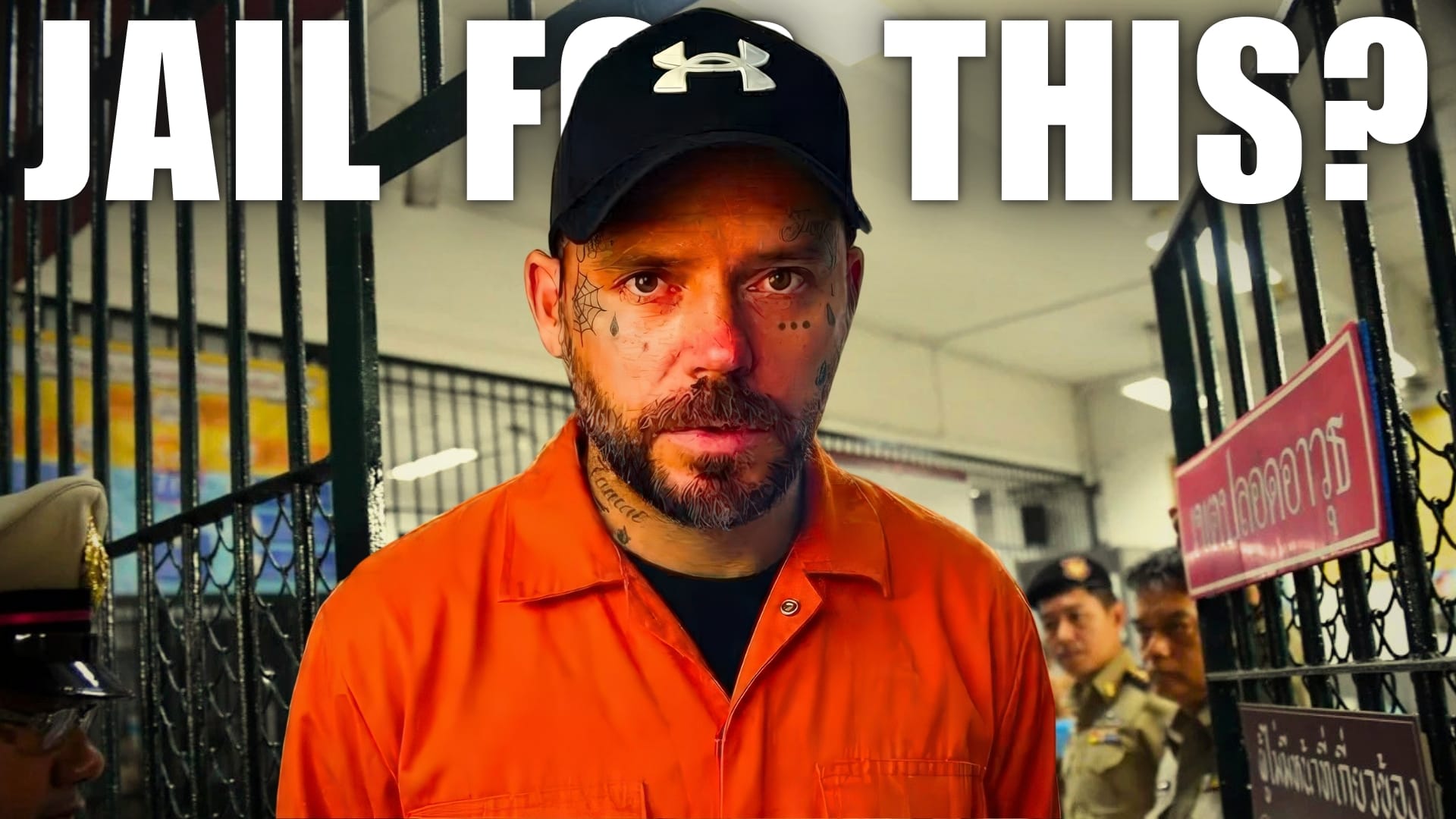
Thailand is one of the most incredible countries in the world to visit. The food is amazing, the islands look like computer wallpaper, the people are warm, and for many travelers, life here feels more relaxed than back home.
But that relaxed feeling is exactly where tourists can get themselves into trouble.
Because Thailand may feel super chill… until the police show up.
Every year, millions of people travel to Thailand for holidays, long stays, retirement scouting trips, digital nomad adventures, nightlife, beaches, food, temples, and that classic Southeast Asia freedom feeling. Most people have a brilliant time and go home with nothing worse than sunburn, a Chang hangover, or a suitcase full of elephant pants.
But some tourists make one mistake they did not even realize was a crime. Not drugs. Not fighting. Not robbing anyone. Just something that felt completely normal back home.
This Thailand Travel Guide is not here to scare you away. Thailand is not a dangerous country for normal, respectful travelers. But it is still a country with its own laws, culture, customs, and legal system. Your version of “normal” does not travel with your passport.
In this guide, we are breaking down the laws tourists go to jail for in Thailand, or at least laws that have led to arrests, detention, deportation, serious legal exposure, or time behind bars. Some of these will be obvious. Others may genuinely surprise you.
Quick disclaimer: I am not a lawyer. Thai laws can change, and enforcement can vary depending on the situation. This article is based on public news reports, official warnings, and well-known legal issues affecting tourists and foreigners in Thailand. Always check current official guidance before you travel to Thailand.
Get my free travel tips and hacks guide here https://paradiseadventures.live/southeast-asia-travel-tips-and-hacks-free-guide/
Table of Contents
- Why Tourists Get in Trouble in Thailand
- 1. Flying a Drone Without Permission
- 2. Bad Reviews and Online Defamation
- 3. Vaping and E-Cigarettes
- 4. Illegal Gambling and Private Poker Games
- 5. Public Indecency and Explicit Content
- 6. Illegal Work and Unlicensed Guiding
- 7. Lèse-Majesté and Royal Insult Laws
- Two Obvious Laws That Still Ruin Lives
- How to Stay Safe and Avoid Legal Trouble
- Final Thoughts
- FAQ: Thailand Laws Tourists Should Know
Why Tourists Get in Trouble in Thailand
Tourists usually do not get into trouble in Thailand because they are trying to be criminals. They get into trouble because they assume Thailand works like home.
That is the dangerous gap.
Back home, leaving a bad review might just be customer feedback. In Thailand, if it crosses into defamation or false claims, it can become a criminal matter. Back home, a private poker night might be harmless. In Thailand, gambling laws are strict. Back home, vaping might be normal. In Thailand, vaping products can lead to fines, confiscation, arrest risk, or worse depending on the offence and enforcement.
This is the theme you need to understand before your Thailand trip:
Thailand can feel relaxed, but relaxed does not mean lawless.
Just because other tourists are doing something does not mean it is legal. Just because someone is selling it on the street does not mean you can legally buy it. Just because something is normal in America, the UK, Australia, Canada, or Europe does not mean it is normal under Thai law.
If you are researching Thailand Travel, Travel Thailand, Thailand Vlog content, living in Thailand, expat Thailand, moving to Thailand, retire in Thailand, or Thailand lifestyle videos, this is one of the most important Thailand travel tips you can learn.
1. Flying a Drone Without Permission
This one is especially important for vloggers, travel creators, drone pilots, and anyone who wants those cinematic Thailand shots for Instagram, YouTube, or a Thailand vlog.
Thailand is one of the most beautiful drone countries on earth. Beaches. Islands. Temples. Mountains. Bangkok skyline. Longtail boats. Rice fields. Golden sunsets. It is almost unfair how good it looks from the air.
So you land in Thailand. You see an empty beach. The light is perfect. The drone is in your bag. You think, “I’ll just send it up for thirty seconds and get the shot.”
That one decision can become a serious legal problem.
Thailand has drone rules involving aviation and communications authorities, and temporary restrictions can also apply during security situations. In 2025, the Civil Aviation Authority of Thailand issued a drone ban during Thai-Cambodian border tensions and warned that violations could carry up to one year imprisonment, a fine of up to 40,000 baht, or both. :contentReference[oaicite:0]{index=0}
That is not “oops, delete the footage.” That is prison exposure.
Foreign tourists have also been reported as arrested or detained after flying drones during restriction periods in places like Pattaya. The key point is simple: tourists may not know about temporary drone restrictions, but not knowing does not guarantee protection from enforcement.
Drone mistakes happen because tourists focus on the shot, not the airspace. You might not realize you are near an airport. You might not know you are close to a military zone. You might not know there is a temporary national drone ban. You might think other tourists flying means it is fine.
That is risky thinking.
How to avoid drone trouble in Thailand
- Check current CAAT guidance before you fly.
- Do not fly near airports, military areas, government buildings, crowds, or sensitive sites.
- Do not fly near temples or ceremonies without permission.
- Check for temporary drone bans before launching.
- If in doubt, leave the drone in the bag.
Thailand travel tip: The drone shot is not worth the arrest.
Book your Thailand accommodation through trusted providers here:
Booking.com = https://booking.tp.st/ZjeV6SG5
Agoda = https://agoda.tp.st/LKGhCniM
Hostelworld = https://hostelworld.tp.st/yznTwSKe
2. Bad Reviews and Online Defamation
This might be one of the most surprising laws tourists go to jail for in Thailand, because it feels completely normal in the West.
Bad hotel? Leave a bad review.
Terrible restaurant service? One star.
Rude owner? Type the whole story while you are still angry at the table.
In many countries, this is just consumer behavior. In Thailand, it can become more serious if the review includes false claims, defamatory statements, or accusations that damage a business or person’s reputation.
A widely reported case involved American tourist Wesley Barnes, who faced legal trouble after negative hotel reviews about the Sea View Resort on Koh Chang. The Guardian reported that he was arrested and spent two nights in jail before being released on bail, with the dispute beginning over a corkage-fee disagreement and later negative reviews.
There was also a more recent case involving a British man accused of posting fake negative reviews of a restaurant in Phuket. Reports said the restaurant’s rating dropped significantly after alleged one-star review activity, and the man was detained after an arrest warrant related to false computer data and defamation claims. :contentReference
Think about how shocking that sounds to a tourist.
You argue with a business. You go online. You leave a review. Suddenly, what felt like customer feedback becomes a police case.
That does not mean you can never leave a negative review in Thailand. But it does mean you need to be careful, factual, and calm. There is a big difference between:
“The food took 45 minutes and my order was wrong.”
And: “This place is a scam, the owner is a criminal, everyone should destroy their rating.”
One is a factual complaint. The other could be treated very differently.
How to avoid defamation trouble in Thailand
- Keep reviews factual and specific.
- Do not make accusations you cannot prove.
- Avoid insults, threats, and emotional exaggeration.
- Do not organize fake reviews or review-bomb a business.
- Try to solve disputes privately first.
Simple rule: Facts, not fury.

3. Vaping and E-Cigarettes
This is one of the easiest Thailand travel mistakes to make because vaping is normal in many countries.
People bring vapes through airports. They use them outside bars. They carry them in pockets, handbags, backpacks, and checked luggage. In many places, vaping is treated like a normal lifestyle choice.
Thailand is different.
Thailand has strict enforcement around e-cigarettes and vaping products. Tourists can face confiscation, fines, arrest risk, and in serious cases, potential prison exposure depending on the exact offence, such as import, sale, possession, or use. Recent reporting has also warned tourists about heavy fines and possible jail time for vaping in Thailand. :contentReference[oaicite:3]{index=3}
One of the most famous examples involved French tourist Cecilia Cornu, who was reportedly arrested in Phuket over an e-cigarette, had her passport confiscated, spent nights in custody, and was deported.
What makes this confusing is that tourists sometimes see vaping products being sold in Thailand. They may also see other tourists vaping in nightlife areas. So they assume it must be legal.
That is one of the biggest mistakes visitors make in Thailand.
Just because something is sold does not mean it is legal. Just because someone else is doing it does not mean you should. Just because one tourist got away with it does not mean you will.
How to avoid vaping trouble in Thailand
- Do not bring vapes or e-cigarettes into Thailand.
- Do not pack them in carry-on or checked luggage.
- Do not buy vaping products from street sellers.
- Do not assume public use is safe because others are doing it.
- Check legal alternatives before you travel if you use nicotine.
Thailand travel tip: If you are packing for a Thailand trip, leave the vape at home.
4. Illegal Gambling and Private Poker Games
This one surprises a lot of Western men, especially older travelers, expats, retirees, digital nomads, and people used to casual home poker games.
Picture the scene.
You are on Koh Phangan or staying in a Phuket villa. You meet a few expats and tourists. Someone has cards. Someone has chips. There are a few beers on the table. It is private. Low stakes. Friendly. Nobody is getting hurt.
In Thailand, that can still become a police matter.
Gambling in Thailand is heavily restricted, with limited exceptions such as the official lottery and licensed horse racing. Most other gambling is illegal, including many private cash card games. :contentReference[oaicite:4]{index=4}
Reports have described police raids involving foreign nationals at private poker games in tourist areas like Koh Phangan and Phuket. These stories work so well as warnings because they challenge what many Western tourists consider normal.
In the UK, US, Australia, Canada, and parts of Europe, a friendly poker night at home might feel harmless. In Thailand, if money is involved, the situation changes.
The private villa does not create private law.
How to avoid gambling trouble in Thailand
- Do not join cash poker games.
- Do not go to underground gambling nights.
- Do not organize betting events or sports-betting meetups.
- Be cautious if strangers invite you to a private game in a tourist area.
- Keep card games completely non-monetary if you play socially.
Simple rule: The friendship is worth more than the pot, and definitely worth more than explaining poker chips to Thai police at midnight.
5. Public Indecency and Explicit Content
Thailand has a nightlife reputation. Everyone knows it. Parts of Bangkok, Pattaya, Phuket, and other tourist areas have visible nightlife, adult entertainment, party streets, beach bars, and late-night chaos.
That reputation creates a dangerous impression in some visitors’ minds:
Anything goes.
It does not.
Thailand may have famous nightlife areas, but public indecency, public sex, nudity, obscene behavior, and filming explicit content in public can lead to police action. And in the age of smartphones, social media, and influencer culture, the risk can become even bigger.
Public behavior that might already be illegal can become more serious if it is filmed, uploaded, distributed, monetized, or spreads on Thai social media. The legal exposure can grow if online laws or public-order concerns become involved.
Reports have described foreign tourists arrested in Pattaya after allegedly engaging in public sexual behavior and filming it. Other stories have involved obscene stunts by content creators in places like Phuket.
This is one of those things that should not need explaining, but apparently it does.
The street is not a licensed venue. The beach is not a licensed venue. A tuk-tuk is definitely not a licensed venue.
How to avoid public indecency trouble in Thailand
- Keep private behavior private.
- Do not film explicit content in public.
- Do not do nudity or sexual stunts for social media.
- Be respectful near temples, public areas, beaches, and family spaces.
- Remember that locals may record you before police even arrive.
Thailand culture tip: Thailand can be fun, wild, and exciting, but it is still a real country with real people, families, laws, and cultural boundaries.

6. Illegal Work and Unlicensed Guiding
This one matters if you are researching living in Thailand, moving to Thailand, expat Thailand, Thailand lifestyle, digital nomad life, or retiring in Thailand.
Here is the scenario.
You come to Thailand on a tourist visa. You sit in a café in Chiang Mai, Bangkok, Phuket, or Koh Samui. You open your laptop. You answer emails. You take calls. You run your online business. You help organize a trip. You sell tours through Telegram, WhatsApp, Facebook, or Instagram.
In your mind, you are just living the Thailand dream.
In Thai law, the picture can be more complicated.
Working in Thailand usually requires the correct visa, work permission, and legal structure. Some jobs are restricted. Tour guiding is especially sensitive because it is generally treated as work that requires proper authorization and can be restricted for foreigners.
Thailand introduced longer-stay and digital-nomad-style visa measures, including the Destination Thailand Visa, as part of changes aimed at attracting visitors, remote workers, and longer-stay travelers. But visitors still need to understand the exact conditions of their visa and should not assume that a tourist visa allows local work, tour guiding, or running a business in Thailand.
Recent reports from Phuket have described foreigners arrested for allegedly operating illegal tour businesses or acting as unauthorized guides. These cases matter because they show the difference between being a tourist and making money locally.
Thailand might welcome your laptop, but that does not mean every side hustle is legal.
How to avoid illegal work trouble in Thailand
- Do not work on a tourist visa without checking the law.
- Do not guide paid tours unless properly authorized.
- Do not sell local trips casually through social media.
- Do not assume remote work is automatically covered by your visa.
- Check your visa conditions before moving to Thailand or working from Thailand.
Thailand reality check: “I didn’t know” is not a business plan.
7. Lèse-Majesté and Royal Insult Laws
This is the law tourists need to understand before coming to Thailand.
And it needs a different tone.
Thailand’s lèse-majesté law, Section 112 of the Thai Criminal Code, criminalizes defaming, insulting, or threatening the King, Queen, heir-apparent, or Regent. The penalty is three to fifteen years in prison per count
That is not a small fine. That is not a slap on the wrist. That is years in prison.
In 2025, American academic Paul Chambers was arrested in Thailand on royal insult and computer crime charges. Reuters reported that the prosecution was later dropped, but the case still shows how serious this issue can become, including for foreign nationals.
This law catches Westerners off guard because many people come from countries where political jokes, criticism of leaders, satire, memes, and arguments about public figures are normal. In the UK, America, Australia, Canada, and much of Europe, people joke about politicians and public figures constantly.
Thailand is different.
The monarchy occupies a position in Thai culture and law that has no direct Western equivalent. Visitors do not need to fully understand every layer of Thai history to behave respectfully. They simply need to know this is not something to joke about.
This also matters online. A social media comment, old post, share, meme, or video can still create risk if it is seen as crossing the line. The safest advice is simple:
Do not comment on the Thai monarchy.
How to avoid lèse-majesté trouble in Thailand
- Do not joke about the monarchy.
- Do not make memes or negative posts.
- Do not argue about the monarchy with strangers.
- Do not disrespect banknotes, royal portraits, ceremonies, or images.
- If someone starts making jokes or comments, quietly remove yourself.
Thailand culture tip: Understand where you are. Respect it. Move on.
Two Obvious Laws That Still Ruin Lives
Some Thailand laws are not surprising, but they are so serious they still need to be mentioned.
Drug offences in Thailand
Thailand may feel relaxed from the beach bar, but drug offences are not relaxed. Tourists should not buy, carry, transport, or accept drugs from anyone. Do not take packages for strangers. Do not assume cannabis confusion means Thailand is soft on drugs generally.
The U.S. State Department’s Thailand travel information warns that illegal drugs can carry severe penalties in Thailand, including long jail sentences, heavy fines, and even execution for serious offences.
This is one of the most serious travel tips for Thailand: do not play games with drugs here.
Visa overstay in Thailand
Visa overstay sounds boring, but it can ruin future travel plans. Some tourists think overstaying is just a fine at the airport. In some short cases, that may be the outcome. But if police find you first, the situation can become more serious, including detention, deportation, or bans.
If you are planning a Thailand trip, moving to Thailand, retiring in Thailand, or living in Thailand long-term, know your stamp date. Do not guess. Do not assume. Set reminders on your phone. Screenshot your visa details. Check your passport stamp when you enter.
Simple rule: Know your permitted stay date and leave or extend legally before it expires.

How to Stay Safe and Avoid Legal Trouble in Thailand
Most tourists do not get arrested in Thailand. Let’s be clear about that. Thailand is not trying to trap visitors. Millions of people come here every year, have an incredible time, and go home with great memories.
But almost every legal mistake in this guide comes down to the same five assumptions.
1. “It’s legal because everyone else is doing it.”
No. If you see tourists vaping, gambling, flying drones, or doing something sketchy, that does not mean it is legal. It may only mean they have not been caught yet.
2. “It’s legal because someone is selling it.”
Street sellers do not write the law. The fact that you can buy something does not mean you can legally possess or use it.
3. “It’s only a small mistake.”
A small mistake at home might get you a warning. A small mistake in Thailand might mean detention, deportation, or a court date.
4. “I’m a tourist, they’ll go easy on me.”
Maybe. Maybe not. But “I’m on holiday” is not a legal defense.
5. “This would be fine back home.”
This is the big one. Your version of normal does not travel with your passport. When you enter Thailand, you are under Thai law. The question is not, “Would this be okay in my country?” The question is, “Is this okay here?”
Final Thoughts: Thailand Is Paradise, Not a Playground Without Rules
Thailand is still one of the best countries in the world to visit.
This article is not meant to make you scared of Thailand. It is meant to make you prepared. There is a huge difference.
Thailand Travel can be life-changing. Travel Thailand the right way and you will find incredible food, kind people, unforgettable islands, beautiful temples, buzzing cities, affordable living, and a culture that keeps people coming back again and again.
But Thailand is not your country. It does not run on your assumptions. Your version of normal can still be illegal here.
The tourists who get into trouble usually do not wake up thinking, “Today I’m going to break Thai law.” They think they are getting a cool drone shot. Leaving a review. Playing a private game. Carrying something normal. Making a joke. Working quietly from a café.
That is what makes these laws dangerous.
Not because every tourist will break them.
But because many tourists have no idea they exist.
So before your next Thailand trip, remember this:
Check before you fly. Think before you post. Leave the vape at home. Do not gamble for money. Keep private things private. Do not work without the right permission. And never joke about the monarchy.
Thailand is paradise… not a playground without rules.
If this helped, save it before your trip, send it to someone planning to travel to Thailand, and check out more honest Thailand Guide content from Paradise Adventures for real travel tips, Thailand culture, Thailand lifestyle, living in Thailand, and the truth about life in Thailand.
FAQ: Thailand Laws Tourists Should Know
Can tourists really go to jail in Thailand for laws they did not know existed?
Yes. Tourists and foreigners have been arrested, detained, deported, or exposed to prison time in Thailand for actions they may not have realized were serious, including drone violations, online defamation, vaping-related offences, illegal gambling, public indecency, illegal work, and lèse-majesté.
Is Thailand dangerous for tourists?
No, Thailand is not generally dangerous for respectful tourists. Millions of people visit safely every year. The risk comes when tourists assume Thai law works the same way as their home country, ignore local rules, or behave disrespectfully.
Can I fly a drone in Thailand?
You may need registration, permission, and location clearance before flying a drone in Thailand. Temporary drone bans may also apply during security situations. Always check current CAAT rules before flying and avoid airports, military areas, crowds, government buildings, and sensitive sites.
Can I leave a bad review in Thailand?
You can leave factual reviews, but be careful. Avoid insults, false claims, accusations you cannot prove, threats, or review-bombing. Thailand has criminal defamation laws, and online disputes have led to arrests and legal cases.
Is vaping legal in Thailand?
Vaping and e-cigarettes are heavily restricted in Thailand and can lead to confiscation, fines, arrest risk, or worse depending on the situation. Tourists should not bring vapes into Thailand or buy them from street sellers.
Is gambling legal in Thailand?
Most gambling is illegal in Thailand, with limited exceptions such as the official lottery and licensed horse racing. Private poker games involving money can still be illegal, even in villas, homes, or hotel rooms.
Can digital nomads work from Thailand?
It depends on your visa and exact situation. Thailand has introduced visa options for some remote workers and long-stay visitors, but a standard tourist visa should not be treated as permission to run a business, guide tours, or work locally. Always check your visa conditions.
What is lèse-majesté in Thailand?
Lèse-majesté refers to Thailand’s royal insult law under Section 112 of the Criminal Code. It criminalizes defaming, insulting, or threatening the King, Queen, heir-apparent, or Regent, with penalties of three to fifteen years in prison per count.
What should tourists avoid saying in Thailand?
Tourists should avoid negative comments, jokes, memes, or online posts about the Thai monarchy. It is also wise to avoid heated political debates with strangers, especially in public or online.
What is the best Thailand travel tip to avoid legal trouble?
The best Thailand travel tip is simple: do not assume. If something involves drones, vaping, gambling, public behavior, online accusations, work, visas, drugs, or the monarchy, check the current rules before doing it.